Training Evaluation Summary – May 2026
A recent training session, Supporting LGBTQ+ People with Learning Disabilities, delivered through the Love Shack programme, has demonstrated a strong positive impact on participants—building confidence, deepening understanding, and encouraging meaningful action across services.
A Clear Impact on Confidence and Understanding
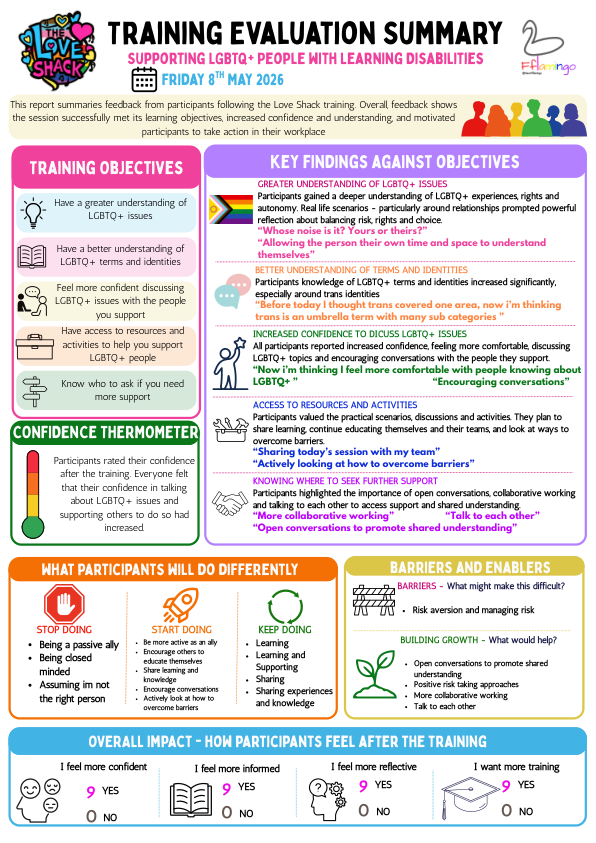
Feedback from participants shows that the training successfully met its objectives. Everyone reported:
- Increased confidence in discussing LGBTQ+ issues
- Improved understanding of LGBTQ+ identities and terminology
- A greater ability to support individuals in a person-centred way
Participants reflected on how the session broadened their perspective, particularly around the diversity within LGBTQ+ identities and the importance of respecting autonomy and choice.
Learning That Translates into Practice
The training encouraged participants to think critically about their approach to inclusion. Real-life scenarios helped highlight the balance between risk, rights, and independence, prompting thoughtful reflection on practice.
Participants shared a strong commitment to applying their learning, including:
- Being more active allies
- Encouraging open conversations with colleagues and individuals they support
- Sharing knowledge within their teams
- Actively addressing barriers to inclusion
From Awareness to Action
One of the most significant outcomes of the session was the shift from passive awareness to active engagement. Participants identified clear actions they will take moving forward, including:
- Supporting ongoing learning within their workplace
- Promoting inclusive conversations
- Creating environments where people feel safe to explore and express their identity
This demonstrates a move beyond understanding towards tangible, everyday practice improvements.
Overcoming Barriers Together
Participants also identified potential challenges, particularly around risk aversion in care settings. However, they highlighted key enablers that can support progress:
- Open and honest conversations
- Collaborative working across teams
- Positive risk-taking approaches
- Shared understanding and peer support
Key Outcomes from the Training
The evaluation highlights several important achievements:
- Improved knowledge of LGBTQ+ identities, including a deeper understanding of trans identities as diverse and multi-faceted
- Greater confidence in discussing LGBTQ+ topics and supporting individuals
- Access to practical tools and resources to apply learning in real situations
- Stronger networks of support, with an emphasis on collaboration and communication
Building Inclusive Support Services
Overall, the training has provided a strong foundation for more inclusive, person-centred support. Participants reported feeling more confident, more informed, and more reflective in their roles—alongside a clear motivation to continue learning and improving.
As services continue to evolve, this kind of training plays a vital role in ensuring that LGBTQ+ people with learning disabilities are supported with dignity, respect, and understanding.