This interactive and participatory workshop explored the transformative potential of co-production in designing and delivering services that truly reflect the needs and strengths of individuals and communities.
The session opened by inviting delegates to reflect on a central question: What does co-production mean to you? Setting the tone for open, inclusive dialogue and the sharing of diverse perspectives.
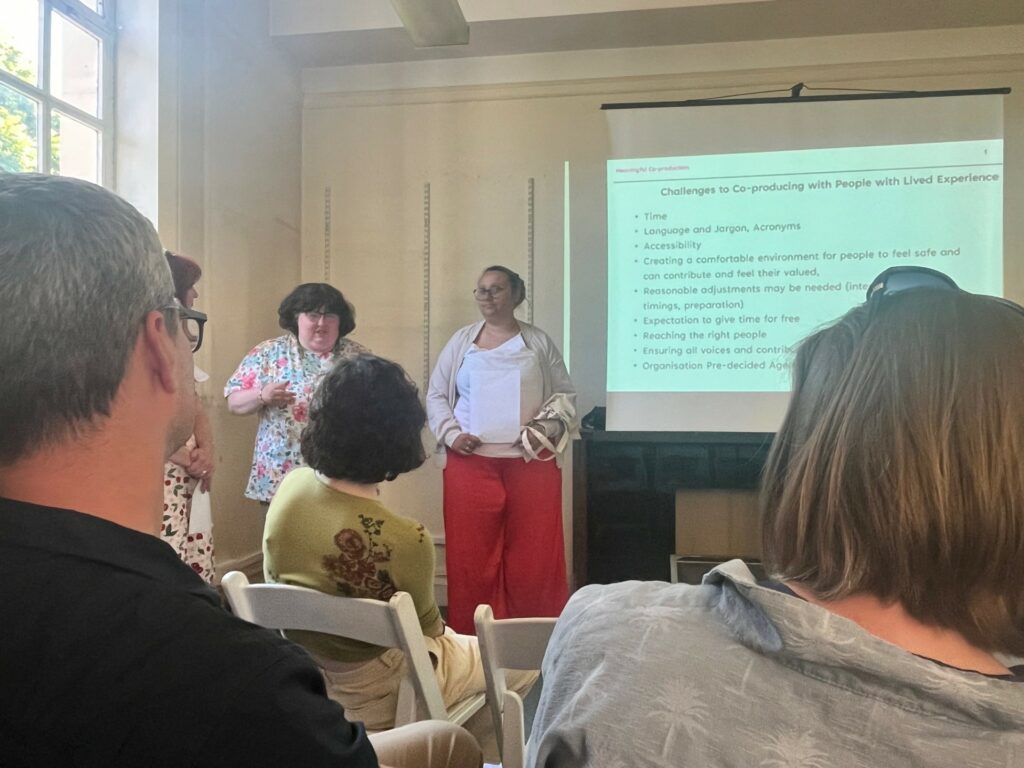
Based on three insightful and thought provoking presentations from MHSOP, the RSPB and the Innovate Trust the participants in the Power of Co-production workshop discussed what good co-production meant to them and what are the main barriers to successful co-production work.
The key identifiers to successful co-production work that were highlighted were as follows
- Everyone being involved in the beginning and at all stages of the journey.
- People working to a shared vision.
- Working together based on respect for each other.
- Utilising the full range of strengths of everyone involved, including those with lived experience
A few key phrases that were used were as follows:
‘nothing about us without us’
‘with not for’
‘keeping the passion alive’
The key barriers to successful co-production work that were highlighted were as follows
- Resistance from those currently in power who see co-production as a challenge or a threat.
- Engrained systems that don’t allow co-production to happen properly.
- Waiting for permission rather than challenging the status quo.
- Co-production can be hard work – it is not always the easiest option.
- Hidden agendas.
- Time/resources/competing demands.
- Assumptions (perhaps unconscious) made about what people can do and understand.
Other statements used were as follows:
‘Co-production needs to be a culture, not an agenda item’
‘We need to change from measuring output to measuring outcomes’
‘Co-production is a hard and jargony word – what should be call it?’ (working together?)
This session was particularly helpful for those involved in engagement, service development, or delivery—and for all those who believe that services work best when they are built with people, not for them, and benefitted from a talk from Stacey Traylor and Joanna Jones, both discussing how their lived experiences are a catalyst to truly consider co-production.
This workshop was facilitated by Duncan Innes, Health and Social Care Facilitator C3SC, along with partners from Mental Health, Innovate Trust and the Dementia Champions Network.
Workshop Slides are available here!!